
A Birmingham, Staffordshire and Midlands Family Archive, c.1852–1988
Archive acquired by Ian Waugh in April 2026.
This archive brings together handwritten family memoirs, typed genealogical notes, recollections related by Freda Castello in 1986–1987, supporting family research notes, loose diagrams, location sketches, and associated printed material. It preserves the history of the interconnected Simpkin, Broughton, Rawlins, Burrows, Castello, Mulholland, McCauley, Atkinson, Steel and Rose families, with particular emphasis on Birmingham, Staffordshire, Worcestershire, Wolverhampton, Leamington Spa, Small Heath, Northfield, Kings Norton, Nechells, Saltley, the New Forest, and related family movements overseas.
The papers are not simply a family tree. They are a layered record of working lives, respectability, concealment, migration, domestic service, railway work, public houses, post-war childhood, family humour, illness, holidays, and inherited memory. They also contain darker material, including the documented 1852 conviction of Samuel Broughton for conspiracy to defraud in connection with the sale of glandered horses.
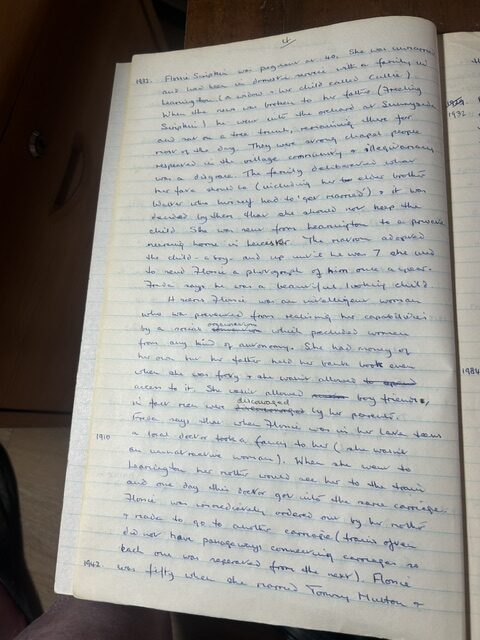
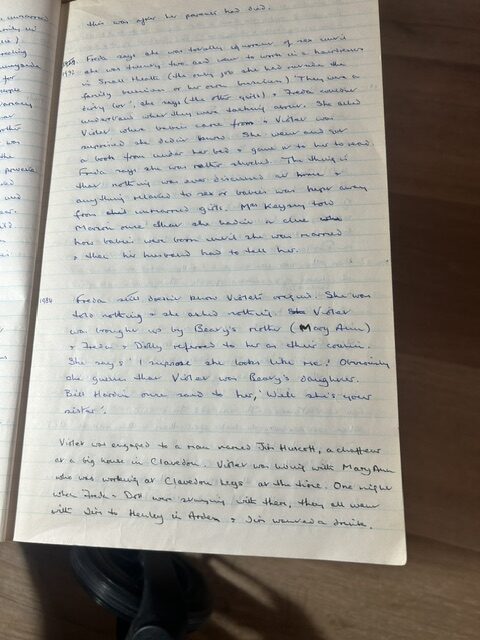
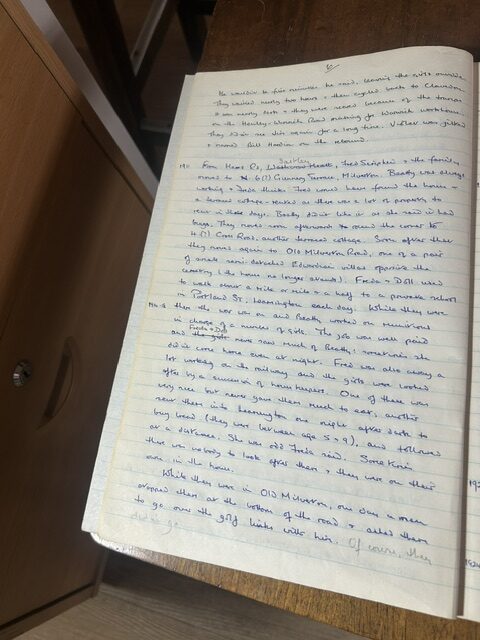
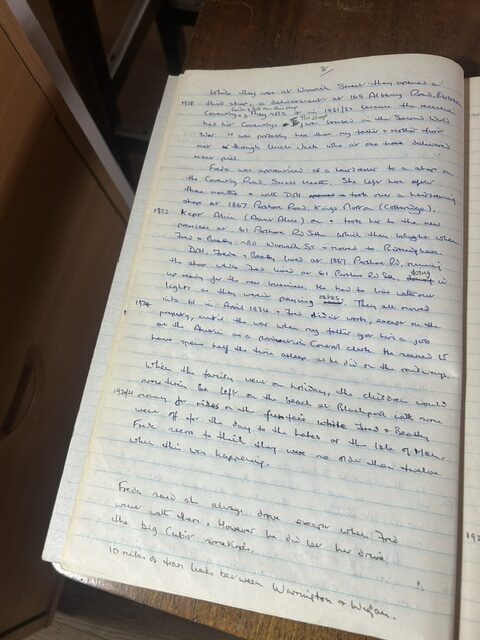
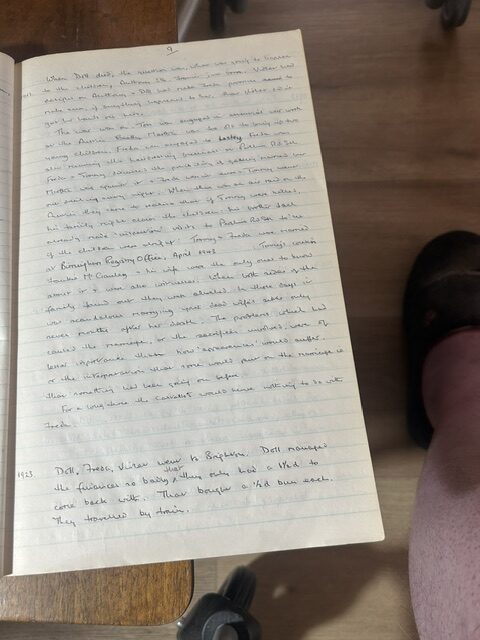
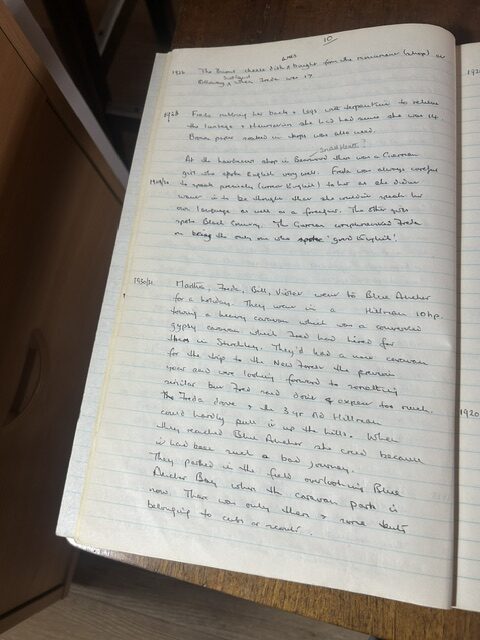
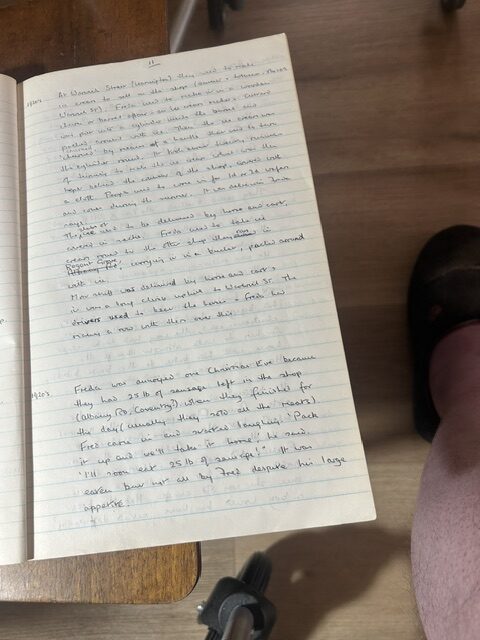
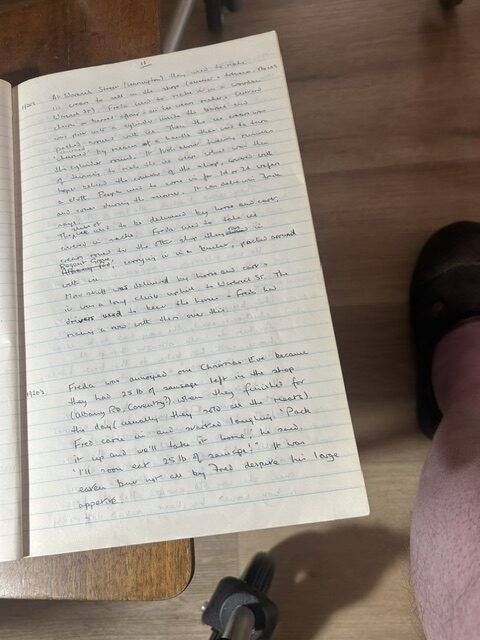
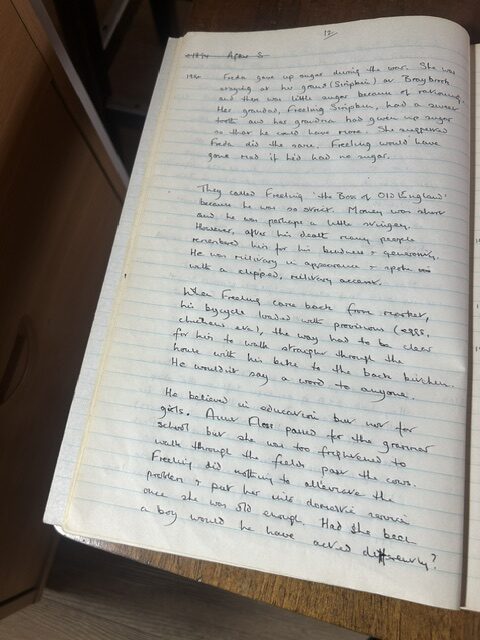
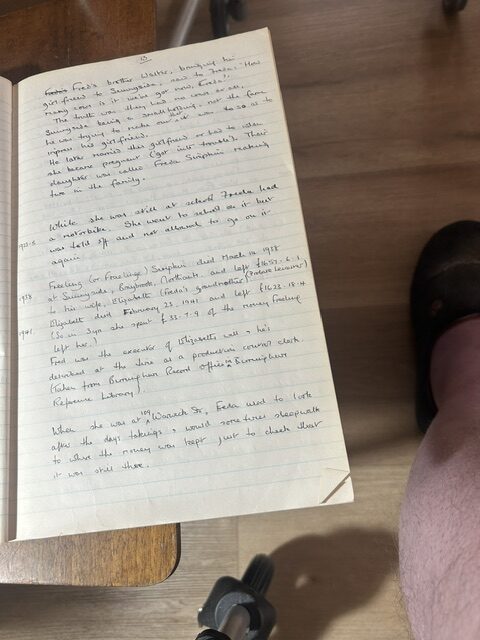
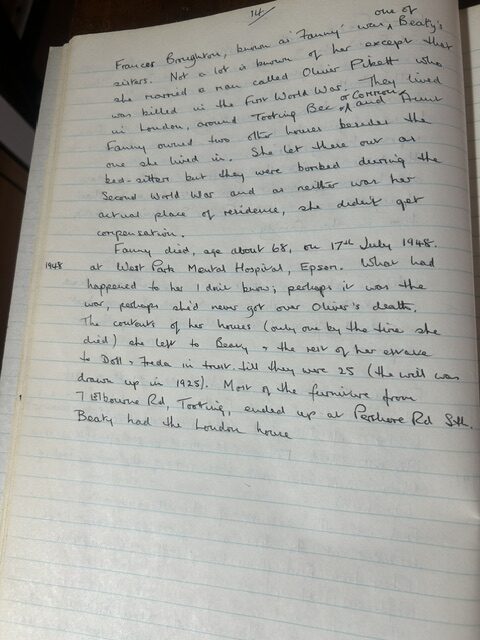
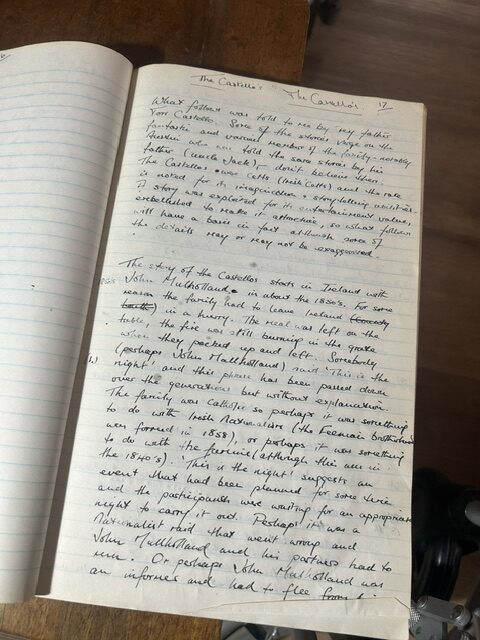
Provenance and Nature of the Collection
The archive and photographs were acquired in April 2026. The material appears to have been compiled from several overlapping sources:
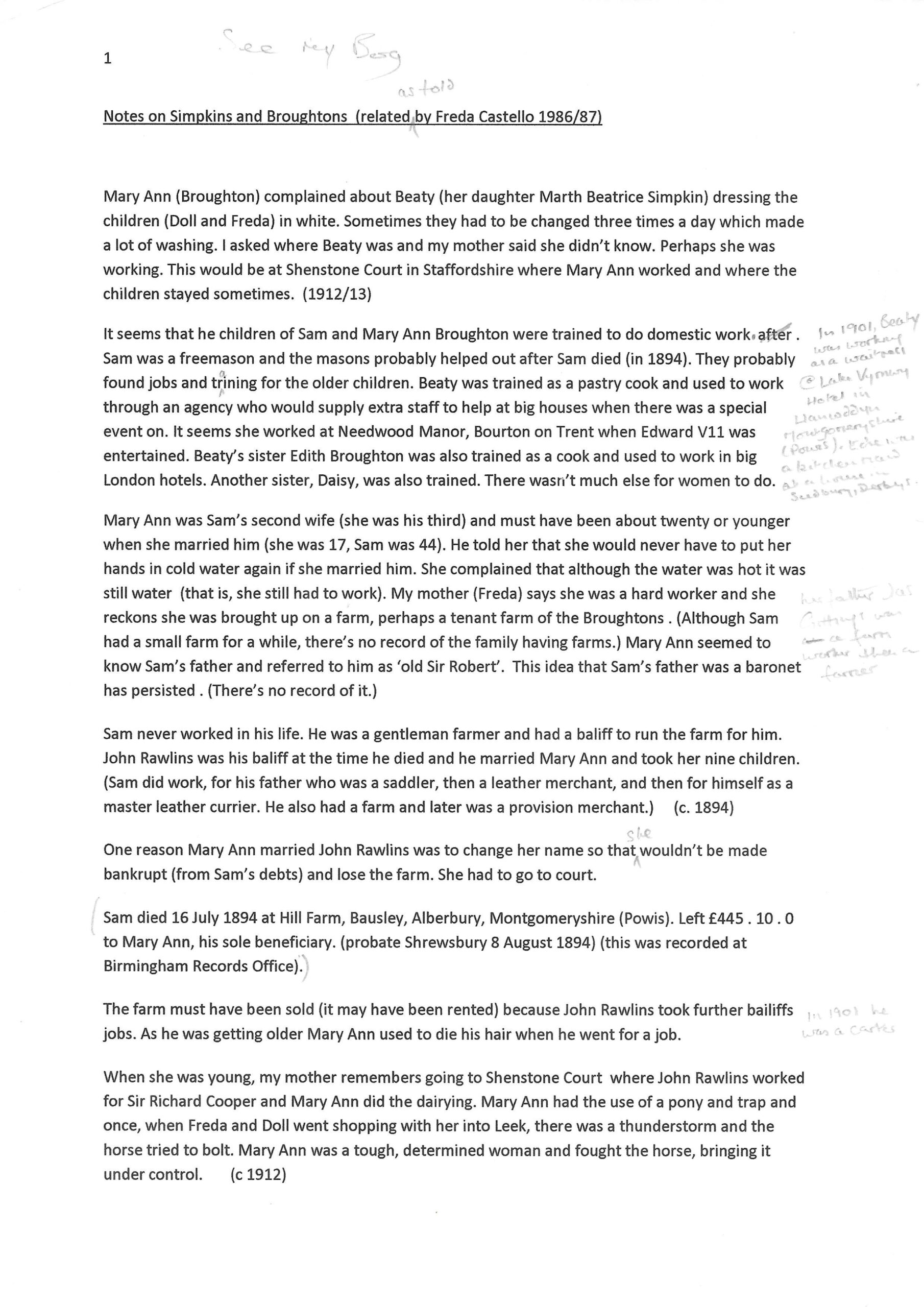
- typed notes headed Notes on Simpkins and Broughtons (related by Freda Castello 1986/87);
- handwritten memoir pages, many apparently written from direct childhood memory;
- family-history summaries headed Mulholland – Castello;
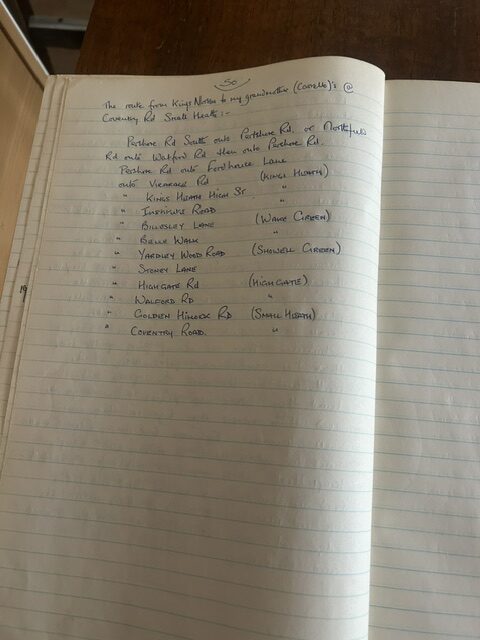
- loose route notes, sketches and maps relating to Birmingham, Leamington and Kings Norton;
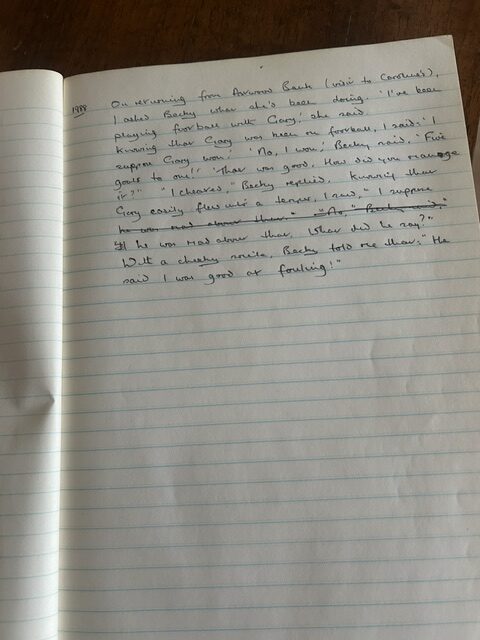
- later family anecdotes, including a 1988 note about Becky and Gary;
- a separate note headed Rose Steel, relating to the Steel and Rose families;
- a printed article concerning the Cubitt motor car, relevant because the family memoir refers to a Cubitt car;
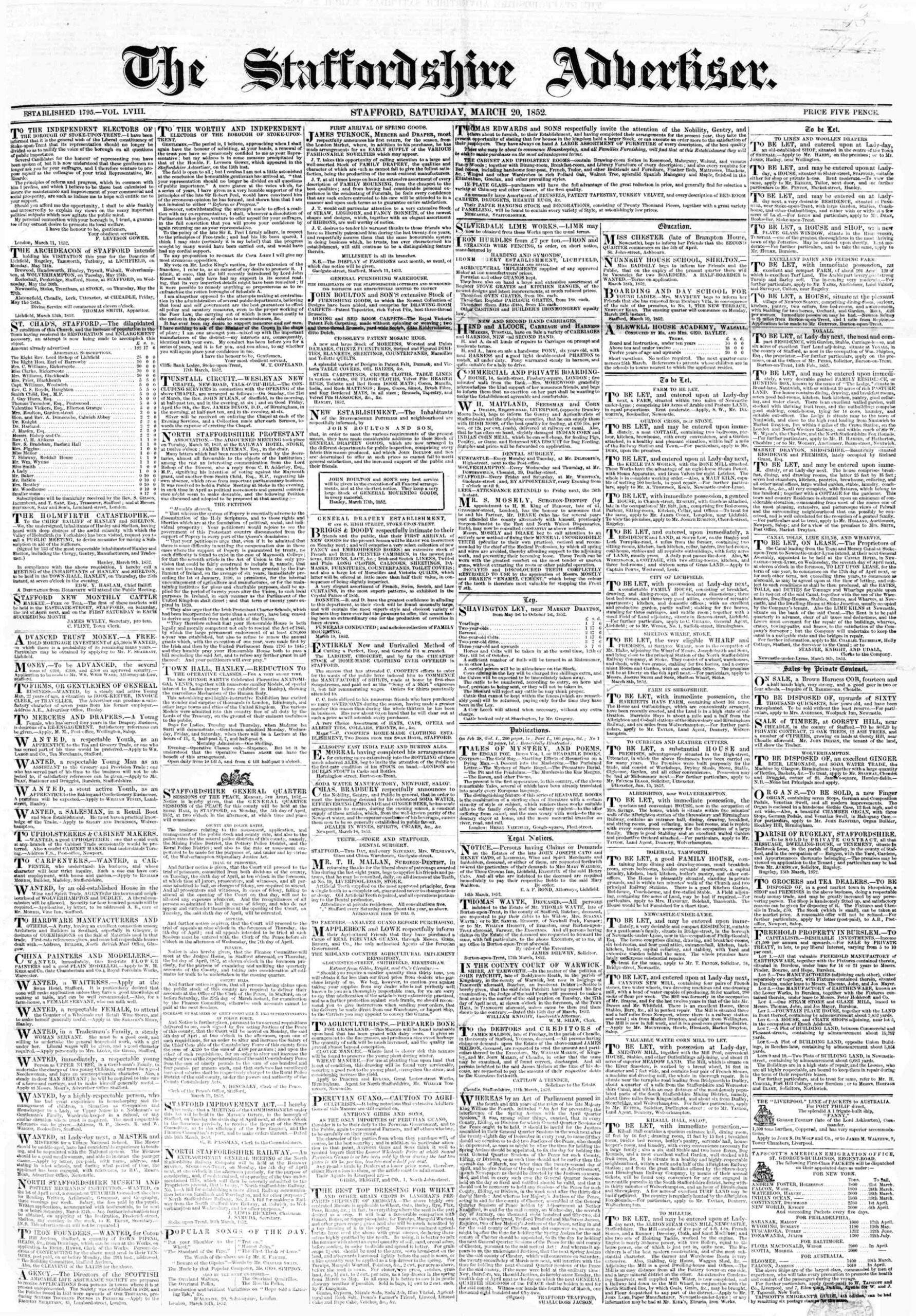
- a contemporary newspaper report from the Staffordshire Advertiser, Saturday 20 March 1852, documenting the criminal case involving Samuel Broughton.
The strongest single voice in the archive is that of Freda Castello, whose recollections preserve memories of earlier generations and her own childhood world. The papers also contain later corrective notes, suggesting that some family memories were checked against certificates, census returns, probate records, or other formal sources.
Important Editorial Note
The archive contains both verified historical material and family memory. Some statements are documentary facts; others are recollections, interpretations, or inherited family stories. This page preserves the distinction wherever possible.
The surname previously read in some handwritten passages as “Sirkins” or “Stripkin” is clarified by the typed family notes as Simpkin / Simpkins. The principal family couple in this branch is therefore Fred Simpkin and Martha Beatrice “Beatty” Broughton.
The Broughton Line: Respectability, Trade and Scandal
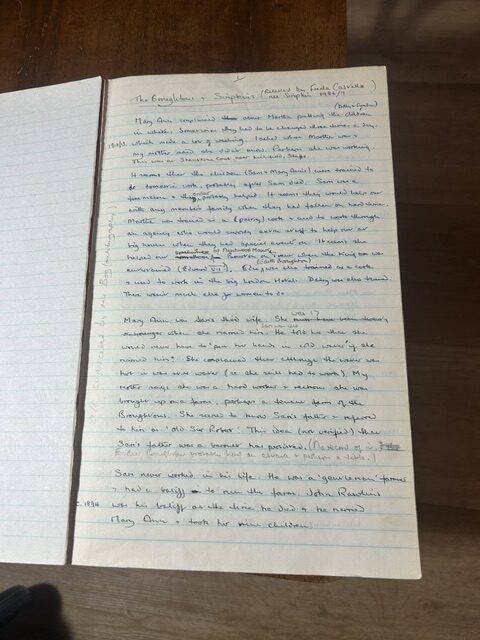
The earliest major figure in the archive is Samuel Broughton, often referred to in family memory as “Sam”. Later recollection presented him as a gentleman farmer, but the supporting notes and newspaper evidence show a more complicated and troubling man.
Samuel Broughton appears to have had associations with saddlery, leather work, horse dealing, farming, and provision dealing. The typed notes state that he worked first for his father, who was a saddler, then as a leather merchant, and then for himself as a master leather currier. He also had a farm and later became a provision merchant.
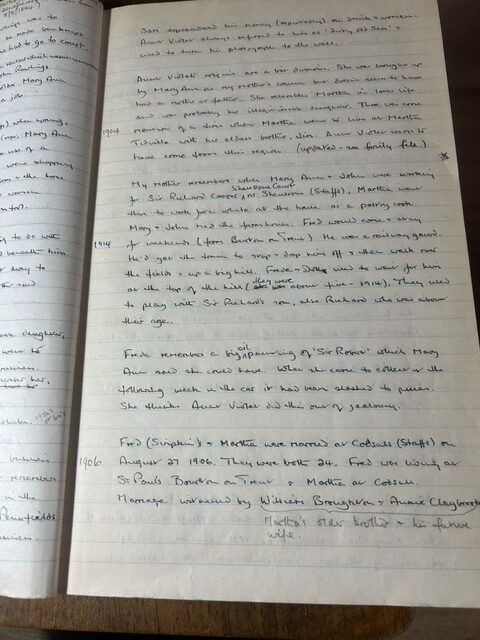
Family memory was not kind to him. Aunt Violet reportedly called him “dirty old Sam” and used to turn his photograph to the wall at Pershore Road South. The archive says that Sam was remembered as having squandered his money on drink and women.
The 1852 Conviction: Diseased Horses and Conspiracy to Defraud
The most serious external evidence concerning Samuel Broughton is the report in the Staffordshire Advertiser of Saturday 20 March 1852. Under the heading “Conviction of Horse Dealers, for Selling Glandered Horses. Conspiracy to Defraud.”, the article names Richard James, George Tagg, Samuel Broughton, Charles Challinor alias Challiner, Samuel Bould and Thomas Hughes as defendants.
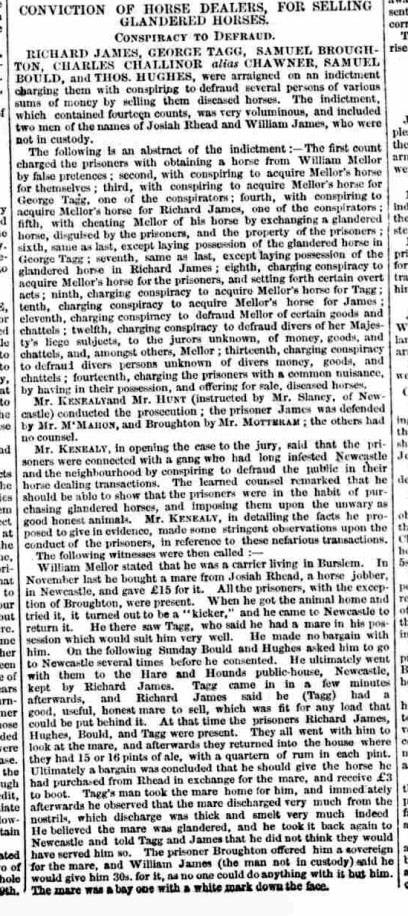

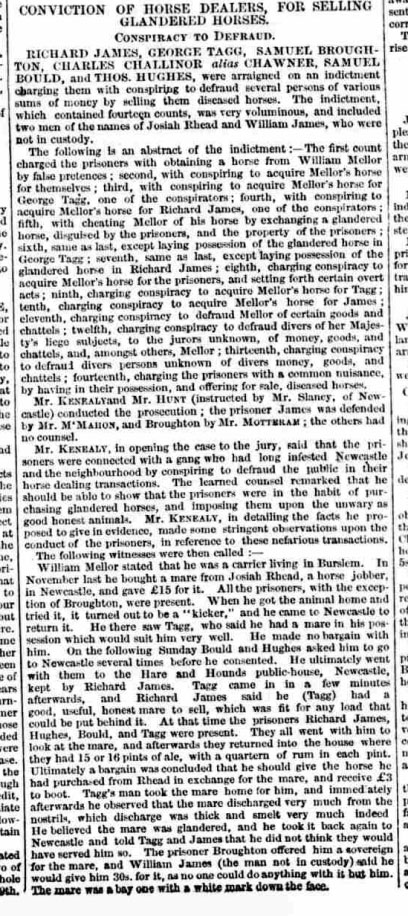

They were charged with conspiring to defraud several persons by selling diseased horses. The indictment was extensive, containing fourteen counts. It alleged false pretences, conspiracy, the exchange and sale of glandered horses, and the possession and offering for sale of diseased horses.
The report describes a network of men operating around Newcastle and the surrounding district, dealing in horses and manipulating buyers. One victim, William Mellor, a carrier of Burslem, had been drawn into a horse exchange involving a diseased mare. The mare was described as discharging from the nostril, the discharge being thick and foul-smelling. The report indicates that the animal was believed to be glandered.
Broughton was not presented as a marginal name. Witnesses placed him in connection with the mare and with efforts to sell or dispose of it. One witness recalled Samuel Broughton having a bay mare with a white streak down the face. Another account placed Broughton among men present when a glandered horse was being discussed or moved.
The defendants were found guilty. The judge, in sentencing, described the offence as systematic fraud and emphasised the need to protect the public from such conduct.
This newspaper report gives weight to later family memory. It helps explain why Samuel Broughton’s reputation may have been damaged, why later relatives remembered him with contempt, and why later generations may have preferred to emphasise more respectable parts of the family story.
Probate and Will
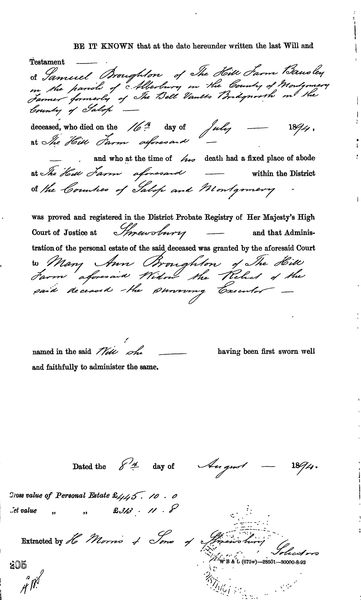
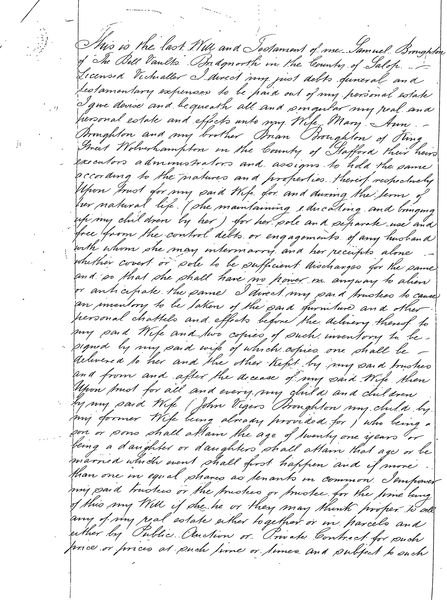
The following documents relate to Samuel Broughton, formerly of The Bell Vaults, Bridgnorth, later of The Heirn Farm, Churchstoke, whose will was written in 1877 and proved at Shrewsbury in August 1894.
Of particular interest is the discovery that this appears to be the same Samuel Broughton connected with an 1852 Staffordshire criminal case involving a charge of “Conspiracy to Defraud.” The surviving probate papers reveal a man who later became a licensed victualler and farmer, carefully arranging the future welfare of his wife and children through a detailed and unusually thoughtful will.
The documents also preserve valuable evidence of family structure, property management, business continuity, and social mobility in the later Victorian period.
PROBATE COPY (1894)
Transcription
BE IT KNOWN that at the date hereunder written the last Will and Testament of Samuel Broughton of The Heirn Farm Bausley in the parish of Churchstoke in the County of Montgomery Farmer formerly of The Bell Vaults Bridgnorth in the County of Salop deceased, who died on the 16th day of July 1894 at The Heirn Farm aforesaid and who at the time of his death had a fixed place of abode at The Heirn Farm aforesaid within the District of the Counties of Salop and Montgomery was proved and registered in the District Probate Registry of Her Majesty’s High Court of Justice at Shrewsbury and that Administration of the personal estate of the said deceased was granted by the aforesaid Court to Mary Ann Broughton of The Heirn Farm aforesaid Widow the Relict of the said deceased the surviving Executor named in the said Will she having been first sworn well and faithfully to administer the same.
Dated the 8th day of August 1894.
Gross value of Personal Estate £445 10s 0d
Net value £313 11s 8d
LAST WILL AND TESTAMENT OF SAMUEL BROUGHTON
Dated 21 February 1877
Page 1 — Full Transcription
This is the last Will and Testament of me Samuel Broughton of The Bell Vaults Bridgnorth in the County of Salop Licensed Victualler. I direct my just debts funeral and testamentary expenses to be paid out of my personal estate. I give devise and bequeath all and singular my real and personal estate and effects unto my wife Mary Ann Broughton and my brother Brian Broughton of King Street Wolverhampton in the County of Stafford their heirs executors administrators and assigns to hold the same according to the nature and properties thereof respectively Upon trust for my said Wife for and during the term of her natural life for the maintaining educating and bringing up my children by her for her sole and separate use and free from the control debts or engagements of any husband with whom she may intermarry and her receipts alone whether covert or sole to be sufficient discharges for the same and so that she shall have no power in any way to alien or anticipate the same.
I direct my said Trustees to cause an inventory to be taken of the said furniture and other personal chattels and effects before the delivery thereof to my said Wife and two copies of such inventory to be signed by my said wife of which copies one shall be delivered to her and the other kept by my said trustees and from and after the decease of my said Wife then Upon trust for all and every my child and children by my said Wife John, Agnes, Broughton my child by my former Wife being already provided for who being a son or sons shall attain the age of twenty one years or being a daughter or daughters shall attain that age or be married which shall first happen and if more than one in equal shares as tenants in common.
I empower my said trustees or the trustee or trustees for the time being of this my Will if she he or they may think proper to sell any of my real estate either together or in parcels and either by Public Auction or Private Contract for such price or prices at such time or times and subject to such…
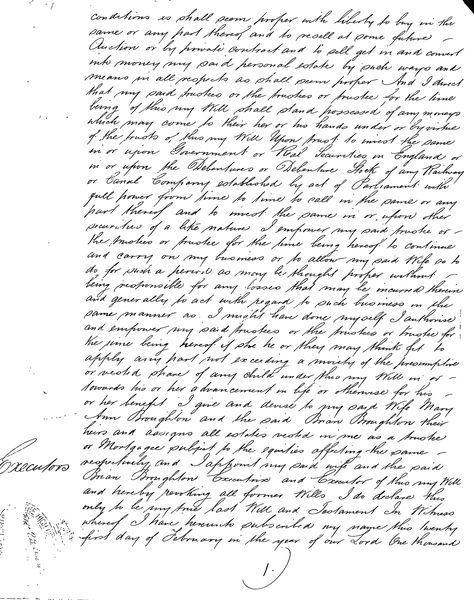
Page 2 — Full Transcription
…conditions as shall seem proper with liberty to buy in the same or any part thereof and to re-sell at some future Auction or by private contract and also to sell get in and convert into money my said personal estate by such ways and means in all respects as shall seem proper And I direct that my said trustees or the trustee or trustees for the time being of this my Will shall stand possessed of any monies which may come to their or his hands under or by virtue of the trusts of this my Will Upon trust to invest the same in or upon Government or Real Securities in England or in or upon the Debentures or Debenture Stock of any Railway or Canal Company established by Act of Parliament with full power from time to time to call in the same or any part thereof and to invest the same in or upon other securities of a like nature.
I empower my said trustee or the trustee or trustees for the time being hereof to continue and carry on my business or to allow my said Wife so to do for such a period as may be thought proper without being responsible for any losses that may be incurred therein and generally to act with regard to such business in the same manner as I might have done myself.
I authorise and empower my said trustees or the trustee or trustees for the time being hereof if she he or they may think fit to apply any part not exceeding a moiety of the presumptive or vested share of any child under this my Will in or towards his or her advancement in life or otherwise for his or her benefit.
I give and devise to my said wife Mary Ann Broughton and the said Brian Broughton their heirs and assigns all estates vested in me as a trustee or mortgagee subject to the equities affecting the same respectively and I appoint my said wife and the said Brian Broughton Executrix and Executor of this my Will and hereby revoking all former Wills I do declare this only to be my true last Will and Testament.
In Witness whereof I have hereunto subscribed my name this twenty first day of February in the year of our Lord One thousand…
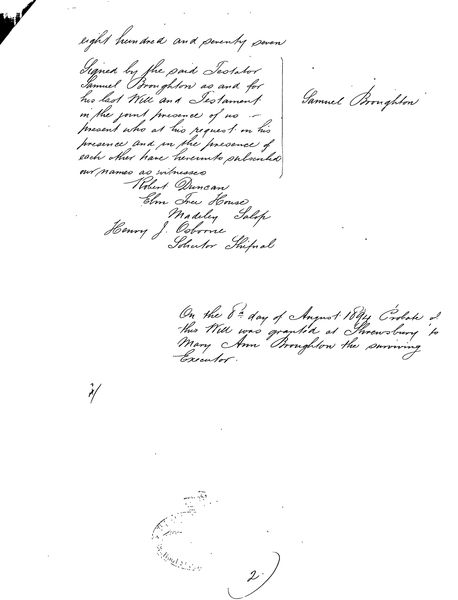
Page 3 — Full Transcription
…eight hundred and seventy seven.
Signed by the said Testator Samuel Broughton as and for his last Will and Testament in the joint presence of us present who at his request in his presence and in the presence of each other have hereunto subscribed our names as witnesses
Robert Duncan
Elm Tree House
Madeley SalopHenry J. Osborne
Solicitor ShipnalSamuel Broughton
On the 8th day of August 1894 Probate of this Will was granted at Shrewsbury to Mary Ann Broughton the surviving Executor.
Samuel Broughton presents an intriguing Victorian life story that appears to bridge two very different worlds. In March 1852, a man of this name was tried in Staffordshire on a charge of “Conspiracy to Defraud,” for which he received a sentence of imprisonment. More than forty years later, probate and testamentary records reveal a Samuel Broughton established as a respectable licensed victualler and farmer, associated first with The Bell Vaults at Bridgnorth and later with The Heirn Farm at Bausley, near Churchstoke.
The surviving documents provide a remarkably detailed glimpse into his later life. His will, written in February 1877, shows a man concerned with the financial security of his wife and children, the orderly management of his business affairs, and the preservation of property for future generations. Particularly notable are the sophisticated provisions relating to investment in government securities and railway or canal debenture stock, reflecting the growing commercial confidence of the Victorian middle classes.
The papers also reveal important family details. Samuel refers to a daughter, Agnes Broughton, by a former wife, stating that she had “already been provided for,” while the remainder of his estate was intended primarily for the support and advancement of his younger children through his wife Mary Ann Broughton. The will further empowered his trustees to continue operating his business after his death, strongly suggesting that The Bell Vaults was a substantial and active concern.
Whether the publican and farmer of the 1870s and 1890s was indeed the same man convicted in the Staffordshire conspiracy case of 1852 remains highly likely, though further documentary evidence is still being sought. If confirmed, the story would represent a striking example of personal rehabilitation and social transition during the Victorian period — from criminal prosecution to respected businessman, landholder, husband, and patriarch.
Mary Ann Broughton and the Rawlins Connection
Mary Ann Broughton was Samuel Broughton’s wife. The notes state that she was his second wife, though also describe her as his third wife in relation to the sequence of Sam’s marriages. She was very young when she married him. The family tradition says she was about seventeen, while Sam was forty-four.
Sam allegedly told Mary Ann that if she married him she would never again have to put her hands in cold water. The joke preserved in the family was that although the water may have been hot, it was still water: she still had to work.
Mary Ann is one of the strongest women in the archive. Freda remembered her, through family stories, as tough, determined, and hardworking. She may have been brought up on a farm, perhaps connected with the Broughtons, though the notes are careful to say that this is uncertain.
Samuel Broughton died on 16 July 1894 at Hill Farm, Bausley, Alberbury, Montgomeryshire, now Powys. Probate was granted at Shrewsbury on 8 August 1894, and he left £445 10s. 0d. to Mary Ann, his sole beneficiary.
After Sam’s death, Mary Ann married John Rawlins, who had been his bailiff. One family explanation was that she married Rawlins partly to change her name and avoid being made bankrupt through Sam’s debts and losing the farm. Whether this interpretation is legally exact requires further evidence, but it is a significant family memory.
John Rawlins later worked as a bailiff at other places. As he grew older, Mary Ann used to dye his hair when he went for a job.
Shenstone Court and Sir Richard Cooper
A major recurring location is Shenstone Court, Staffordshire, where John Rawlins worked for Sir Richard Cooper and Mary Ann did dairying work.
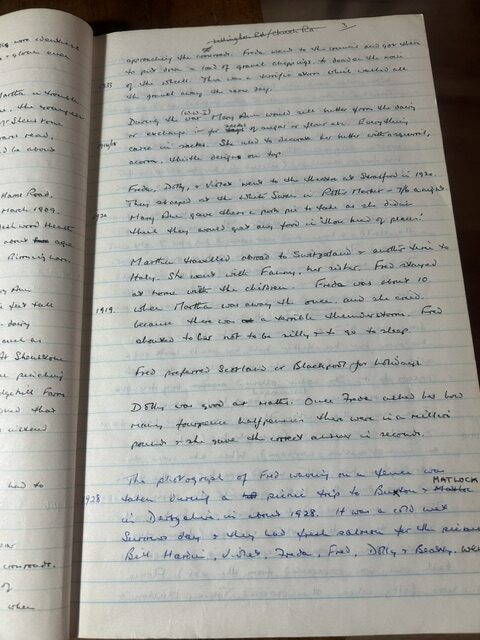
Freda remembered visiting Shenstone Court as a child. Mary Ann had the use of a pony and trap. On one occasion, when Freda and Doll went shopping with her into Leek, a thunderstorm frightened the horse and it tried to bolt. Mary Ann fought the horse and brought it under control. This anecdote became a family example of her strength.
Martha Beatrice “Beatty” Broughton also worked at Shenstone Court for a time as a pastry cook. Fred Simpkin, then connected with railway work, came to stay at weekends. He would travel from Burton-on-Trent, where he was stationed as a railway guard, get the train to stop, and then walk over the fields and up a hill to the farm. Freda and Doll, aged about five, waited for him at the top of the hill. They played with Sir Richard Cooper’s son, also Richard, who was about their age.
Martha Beatrice “Beatty” Broughton
Martha Beatrice Broughton, known as Beatty, is a central figure in the archive. Her precise relationship is as follows: she was the daughter of Samuel Broughton and Mary Ann Broughton, and therefore the stepdaughter of John Rawlins after Mary Ann remarried.
Beatty was trained as a pastry cook and worked through an agency supplying extra domestic staff to large houses when special events were held. The notes state that she worked at Needwood Manor, Burton-on-Trent, when Edward VII was entertained. Her sister Edith Broughton was also trained as a cook and worked in big London hotels. Daisy was also trained. The notes observe simply: “There wasn’t much else for women to do.”
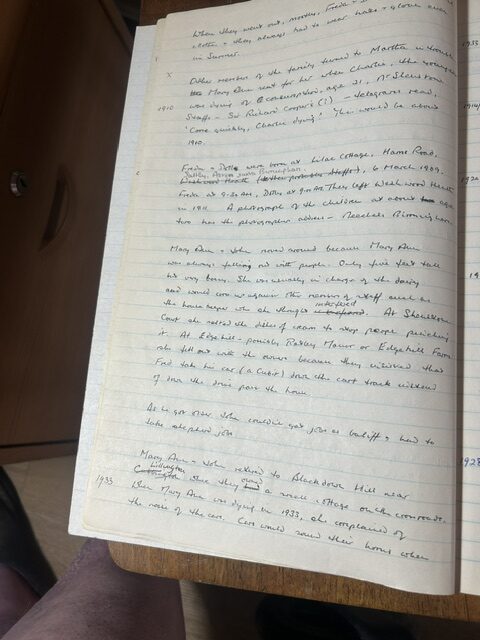
Beatty became the person to whom other family members turned in trouble. When her youngest sibling Charlie was dying of consumption, aged about twenty-one, Mary Ann sent for her. The telegram reportedly read: “Come quickly. Charlie dying.”
The Concealed Birth of Violet Ellen Burrows
One of the most important revelations in the archive concerns Violet Ellen Burrows.
Violet’s origins were long mysterious. She was brought up by Mary Ann as a cousin of Freda’s mother, but she appeared to have no clear mother or father within the family story. Freda’s mother would only say that Violet’s maiden name was Burrows.
The typed notes resolve the mystery. Violet was born at Merthyr Vale, Glamorgan, in 1904. Her birth certificate named her mother as Alice Burrows, née Broughton. However, the notes state that “Alice Burrows” was really Martha Beatrice Broughton, hiding the fact that she was unmarried and that Violet was her daughter.
In other words, Violet was not merely a cousin or stray relation. She was Beatty’s daughter, born before Beatty’s marriage to Fred Simpkin. This concealment reflects the powerful stigma attached to illegitimacy, especially for women in service or from families anxious to preserve respectability.
Violet remained a complicated figure in family memory. She was said to have destroyed or damaged a large oil painting of Robert Broughton which Mary Ann had promised to Freda. When Freda came to collect it, the painting had been slashed. Freda believed Violet had done it out of jealousy.
Fred Simpkin and Martha Beatrice Broughton
Fred Simpkin married Martha Beatrice Broughton at Codsall, Staffordshire, on 27 August 1906. The certificate gave both as aged twenty-four, though the notes suggest Fred was probably twenty-two or twenty-three.
Fred was living in St Paul’s, Burton-on-Trent, and Beatty was living at Codsall. The marriage was witnessed by William Broughton, Beatty’s brother, and his future wife Annie Claybrook.
Fred was connected with the railway and is remembered as a railway guard. Railway identity is a constant thread in the archive: trains, stations, railway yards, timetables, journeys, station houses, and later memories of Fred identifying trains by sound and time.
Freda and Doll Simpkin
Fred and Beatty had twin daughters, Freda and Doll, born on 6 March 1909. Doll was born at 9.00 a.m. and Freda at 9.30 a.m.
The family version placed their birth at Lilac Cottage, Hams Road, Washwood Heath, Birmingham. The notes correct this: it was Hams Road, Saltley, Aston. Saltley, with its gas works and extensive railway yards, was considered less socially attractive, and Freda preferred to call it Washwood Heath.
As children, Freda and Doll often wore identical clothes and were expected to wear hats and gloves even in summer. Mary Ann once complained about Beatty dressing the children in white because it meant they sometimes had to be changed three times a day, creating a great deal of washing.
A photograph of Doll and Freda aged about two bears the photographer’s address in Nechells, Birmingham, suggesting a continued Birmingham connection even after moves connected with Fred’s railway employment.
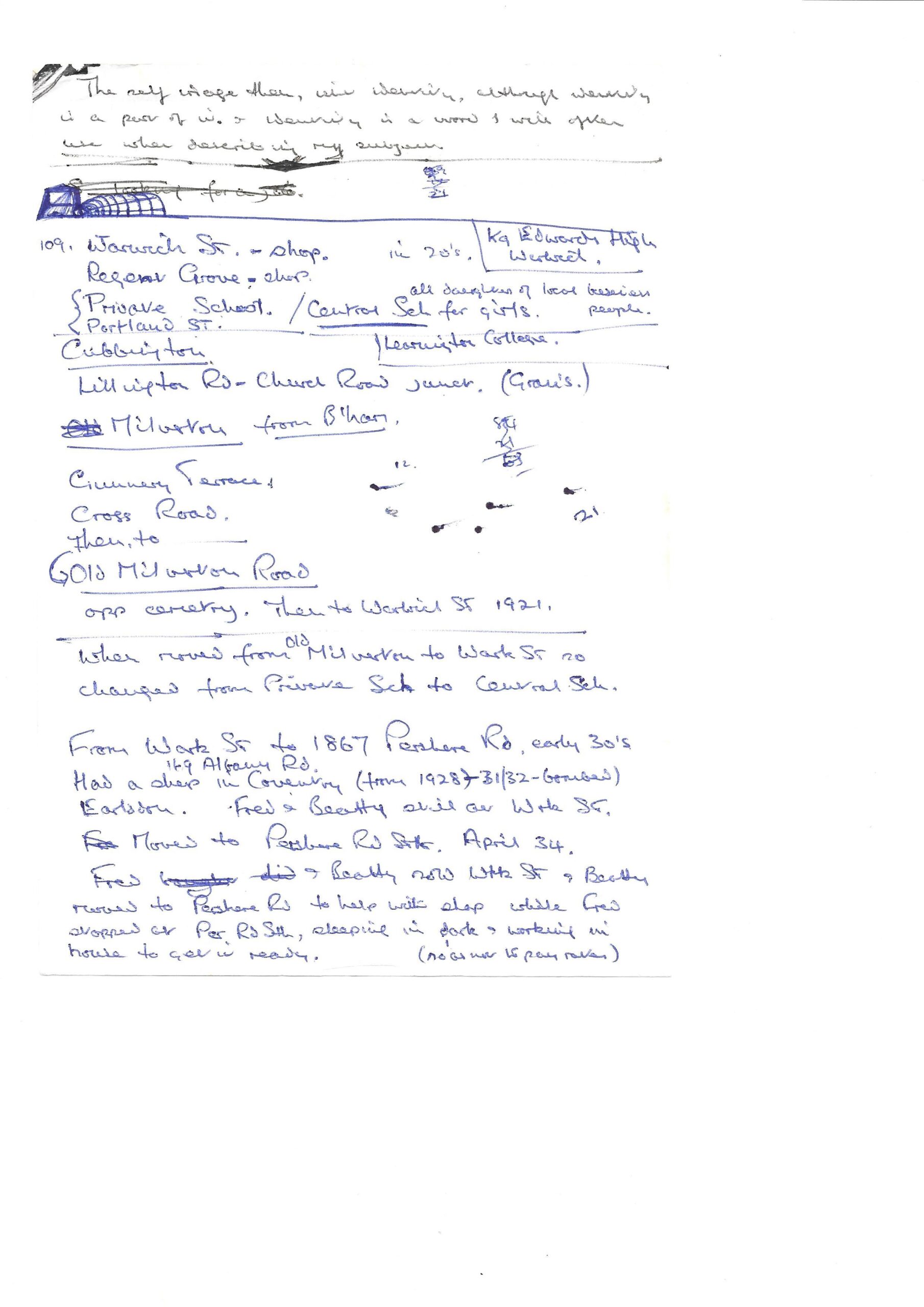
Leamington, Warwick Street and Regent Grove
The family later moved towards Leamington Spa. The notes describe addresses and route memories including Old Milverton Road, Warwick Street, Regent Grove, Portland Street, and Leamington College.
At one stage the family had a shop at 109 Warwick Street, with another shop in Regent Grove. Freda remembered helping with takings and sometimes sleepwalking to check that the money was still safe. The shop had once been a bakery, and the old oven projected into the rear, limiting the space at the back.
The family sold sweets, tobacco, meat, and other goods at different times. One Christmas Eve, Freda was annoyed because twenty-five pounds of sausages remained unsold in the shop. Fred laughed and said they should pack them up and take them home: he would soon eat twenty-five pounds of sausages. They were eaten, though not entirely by Fred.
Freda also remembered making ice cream for sale at Warwick Street. Ice was delivered by horse and cart, covered in sacks, and kept in the cellar. Cream was churned in a cylinder inside a barrel, and people came in for penny or twopenny portions, even in winter.
Schools, Work and Respectability
Freda and Doll attended schools connected with Leamington and Warwick. References include Central School for Girls, Warwick High School, Leamington College for Girls, Portland Street, and private schooling.
The notes also preserve the wider family concern with education, class and gender. Freeling Simpkin, called “the Boss of Old England” because of his strictness, believed in education but not necessarily for girls. Aunt Floss passed for the grammar school but was frightened to walk through fields past cows. Freeling did nothing to ease this fear and put her into domestic service when she was old enough.
The Castello and Mulholland Connection
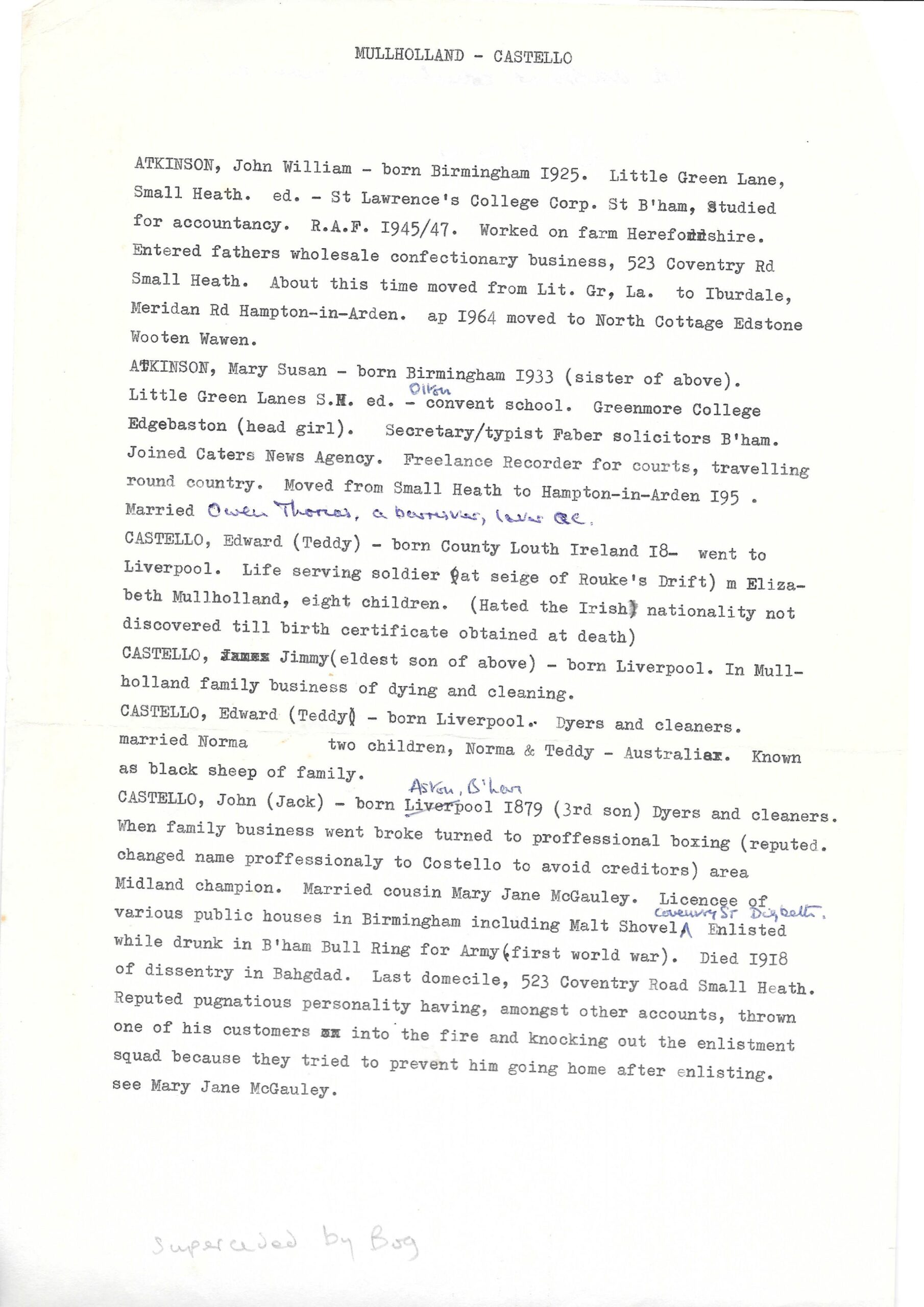
The archive includes a typed family-history sheet headed Mulholland – Castello. This records the Castello line, beginning with Edward “Teddy” Castello, born in County Louth, Ireland. He went to Liverpool and was remembered as a life-serving soldier, said to have been at the siege of Rorke’s Drift. He married Elizabeth Mulholland and had eight children.
The same notes say that Teddy hated being Irish, and that his Irish birth was not known until his birth certificate was obtained after his death.
Among the Castello children were Jimmy, Edward “Teddy”, and John “Jack” Castello. Jack was born in 1879, with later notes indicating Aston, Birmingham rather than Liverpool. He worked in the dyers and cleaners trade, but when the family business failed he turned to professional boxing. He reputedly changed his name professionally to Costello to avoid creditors and became an area Midland champion.
Jack married his cousin Mary Jane McCauley. He was licensee of several Birmingham public houses, including the Malt Shovel, with notes adding Coventry Road and Digbeth. He enlisted while drunk in the Bull Ring for the army during the First World War and died in 1918 of dysentery in Baghdad. His last domicile was 523 Coventry Road, Small Heath.
The typed notes describe Jack as pugnacious, with stories of him throwing a customer into the fire and knocking out the enlistment squad when they tried to stop him going home after enlisting.
Northfield, Kings Norton and Birmingham Childhood
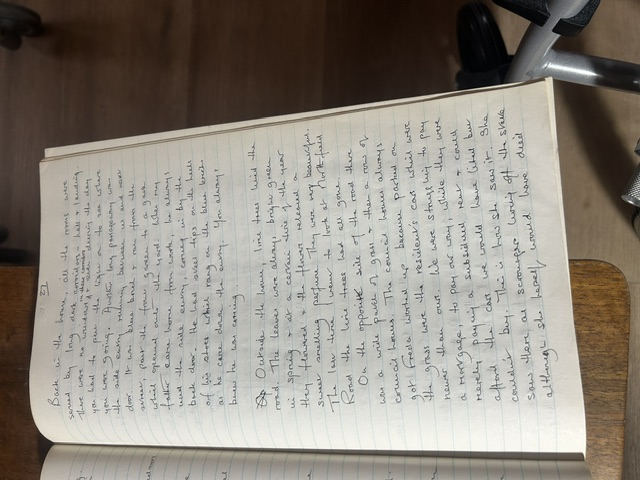
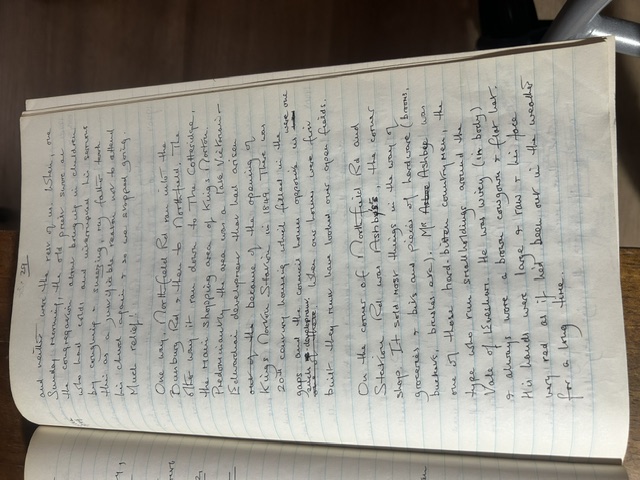
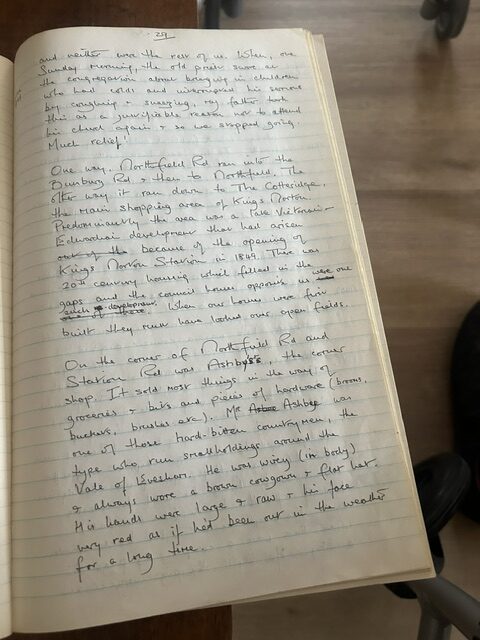
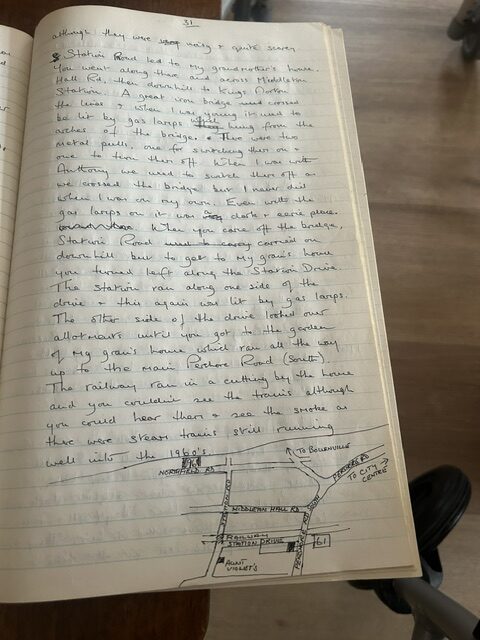
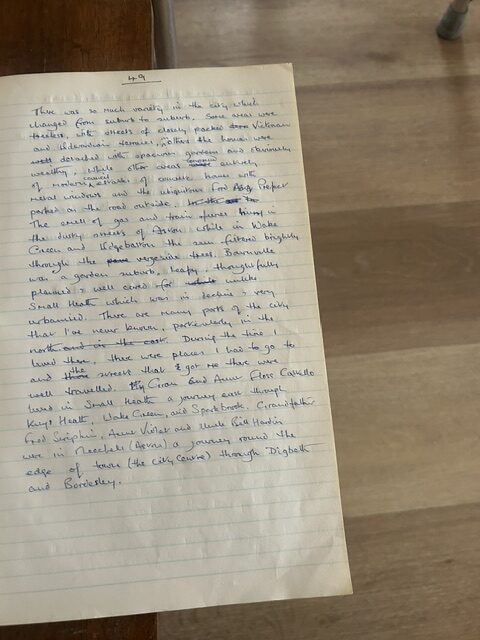
A large part of the handwritten memoir concerns a later childhood centred around Northfield Road, Station Road, Selly Oak Road, Kings Norton Station, Rowheath Park, and the surrounding Birmingham suburbs.
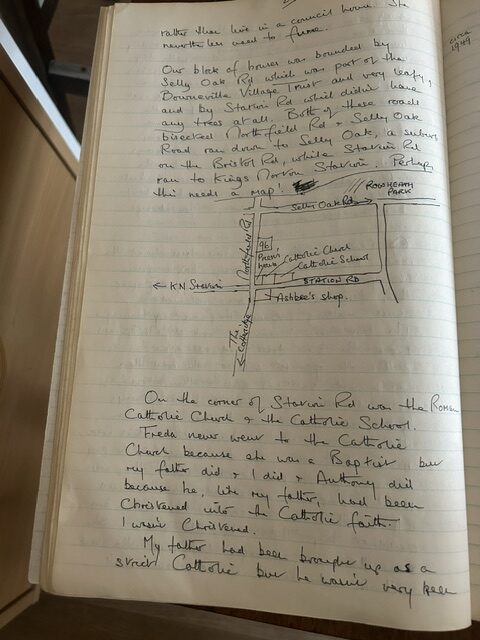
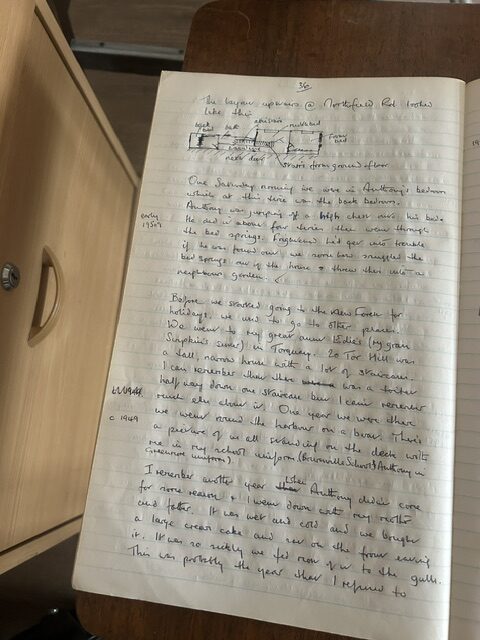
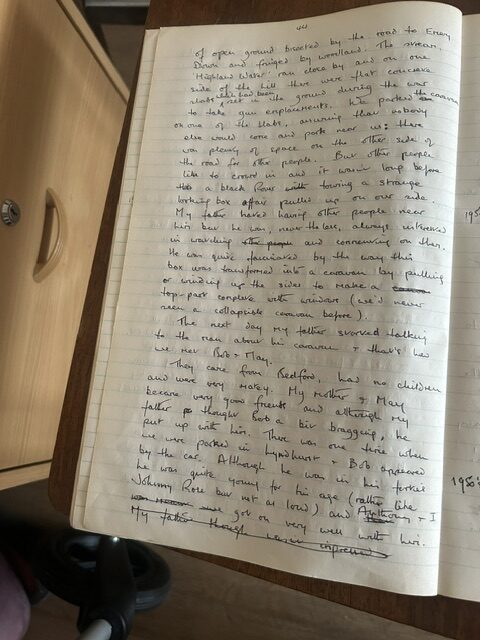
The house at Northfield Road is described in detail. The surrounding area was bounded by Selly Oak Road, part of the Bournville Village Trust, and Station Road. Selly Oak Road was leafy, while Station Road had no trees. Nearby were a Roman Catholic church and Catholic school. The family’s religious identity was mixed: Freda was Baptist, while the narrator’s father and Anthony had been christened Catholic.
The archive includes a hand-drawn map showing Northfield Road, Selly Oak Road, Station Road, Ashbee’s shop, the Catholic church, the Catholic school, Rowheath Park, Kings Norton Station and Cotteridge.
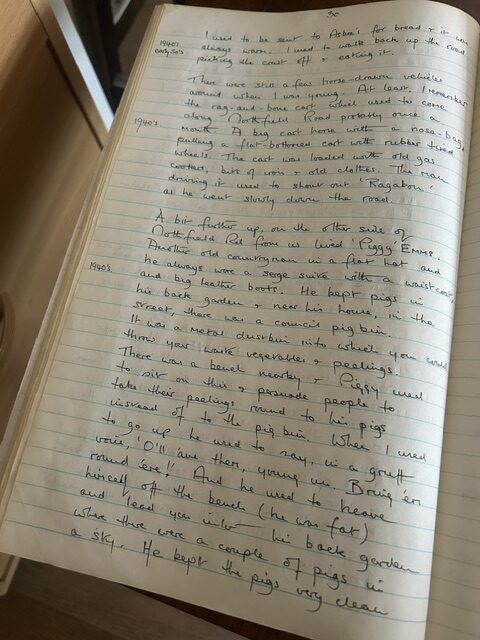
Ashbee’s shop stood at the corner of Northfield Road and Station Road. It sold groceries, hardware, bread, brooms, buckets and brushes. Mr Ashbee was remembered as a wiry, weather-beaten countryman, always in a brown corduroy jacket and flat cap, with large raw hands and a very red face. The narrator was sent there for warm bread and would pick the crust off and eat it on the way home.
The area also had horse-drawn vehicles into the narrator’s childhood. The rag-and-bone cart came down Northfield Road, pulled by a large horse with a nosebag. The driver shouted “Ragabone” as he went.
Another local figure was “Piggy” Emms, who kept pigs in his back garden. A council pig bin stood in the street for vegetable peelings, but Piggy would persuade people to bring peelings to his pigs instead. He sat near the bin and called to children in a gruff voice. His pigs were noisy and smelly, though remembered as clean.
Anthony: Childhood, War and Danger
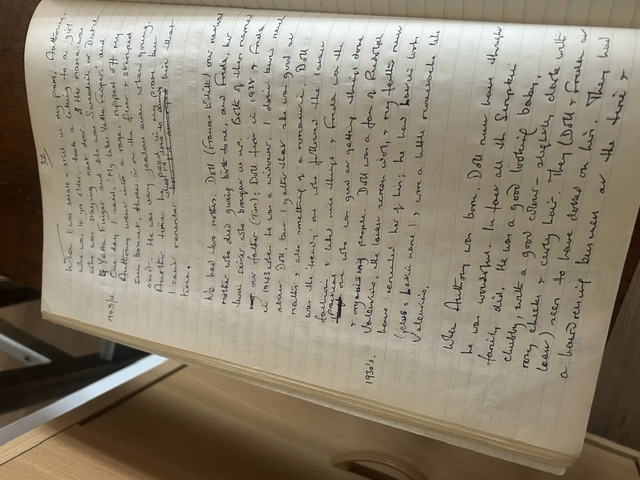
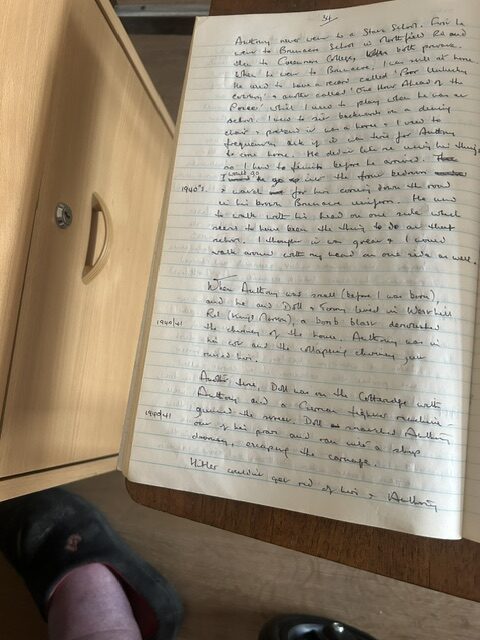
Anthony is a major figure in the later handwritten memoir. He attended Brunswick School in Northfield Road and later Greenmore College. He did not attend a state school.
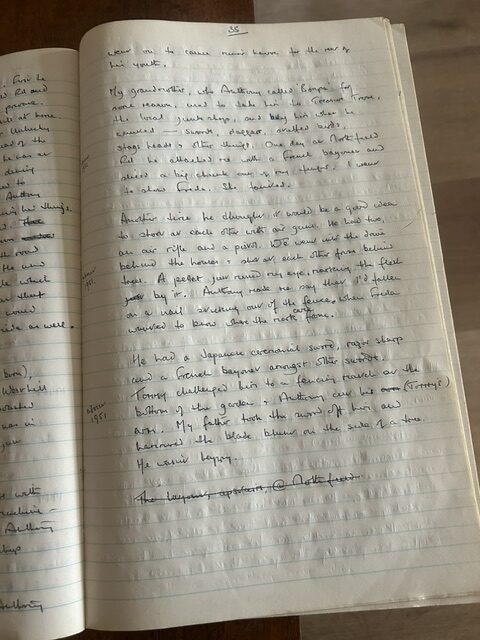
He was remembered as difficult, energetic and sometimes dangerous. As a child he had access to items acquired from junk shops, including swords, daggers, stuffed birds, stag heads, a Japanese ceremonial sword and a French bayonet. On one occasion he attacked the narrator with a French bayonet and sliced a large chunk out of a jumper. On another, he proposed shooting at each other with air guns behind the houses; a pellet passed close to the narrator’s eye.
There are also wartime memories. When Anthony was small, before the narrator was born, he lived with family in Woodhill Road, Kings Norton. A bomb blast demolished the chimney of the house and the falling chimney narrowly missed him in his cot. Another wartime story says that a German fighter machine-gunned the street while Anthony was on a roof with his father; he was snatched from danger and carried into a doorway.
Post-War Holidays: Wales, Butlin’s, Bream, Lulworth and the New Forest
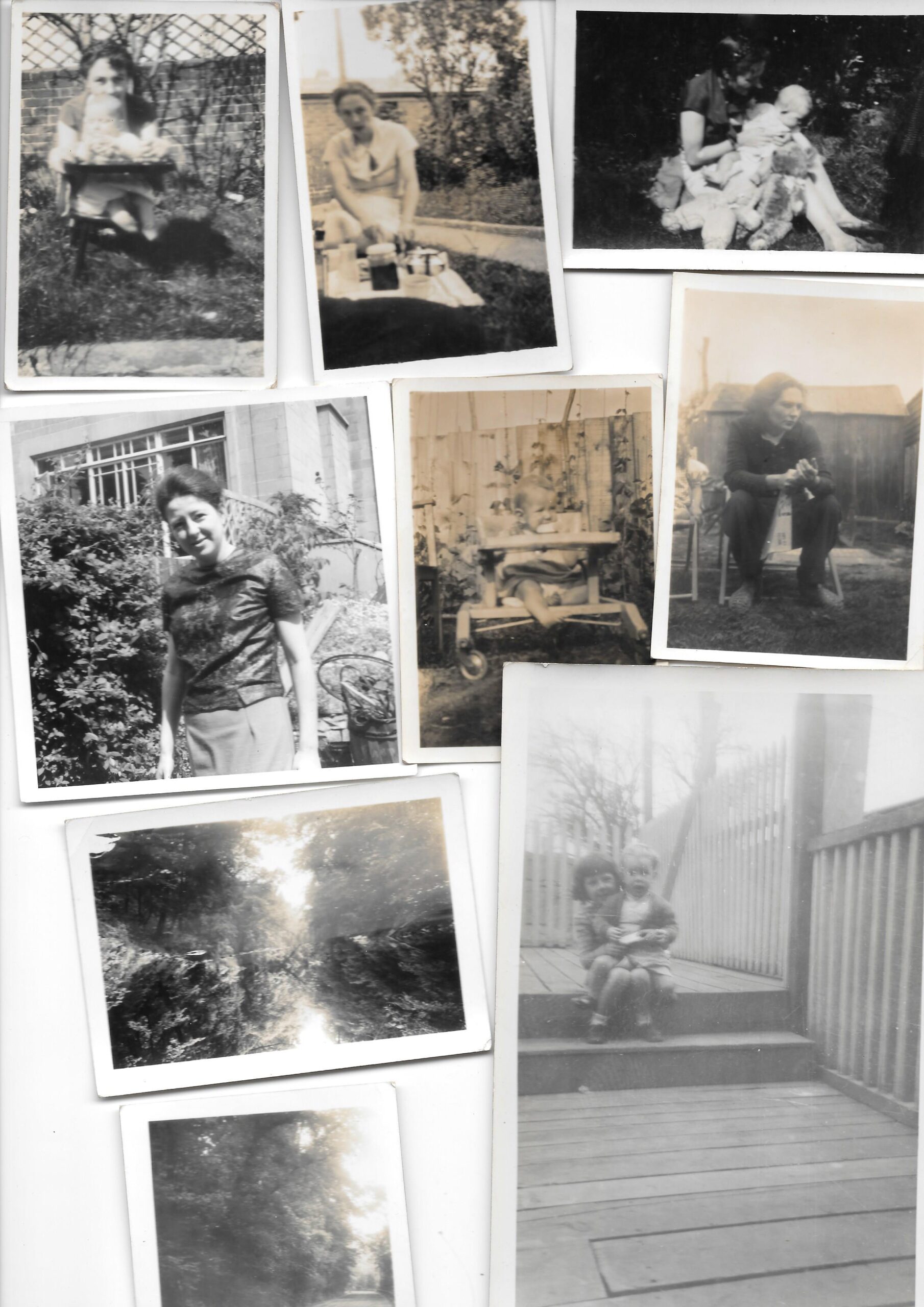
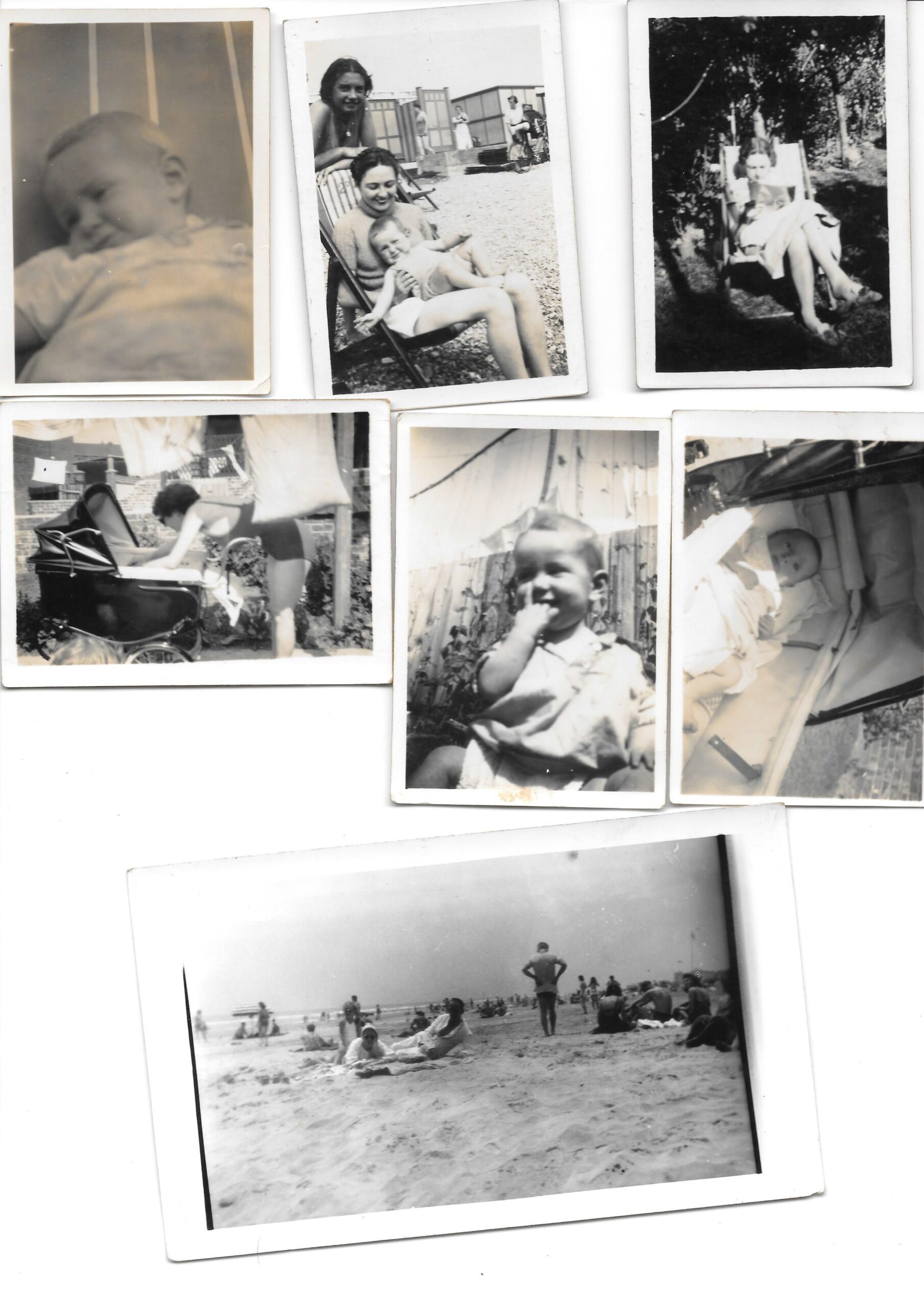
The later memoir gives a rich account of post-war family holidays.
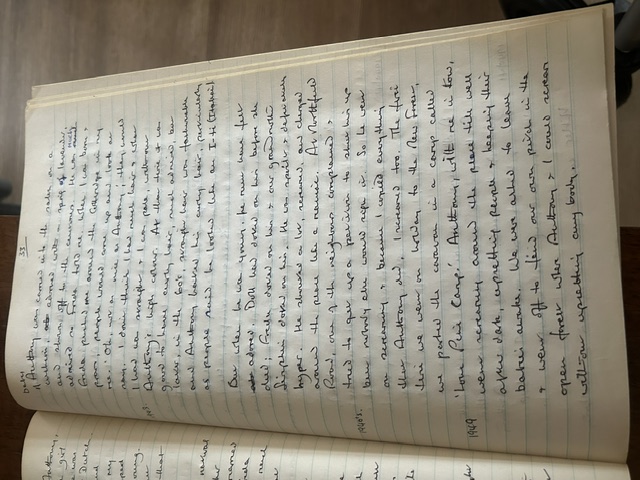
The family visited Torquay, staying at 20 Tor Hill with Great Aunt Edie. The house was tall and narrow, with many staircases, and a toilet halfway down one staircase. Around 1949 the family went around the harbour on a boat.
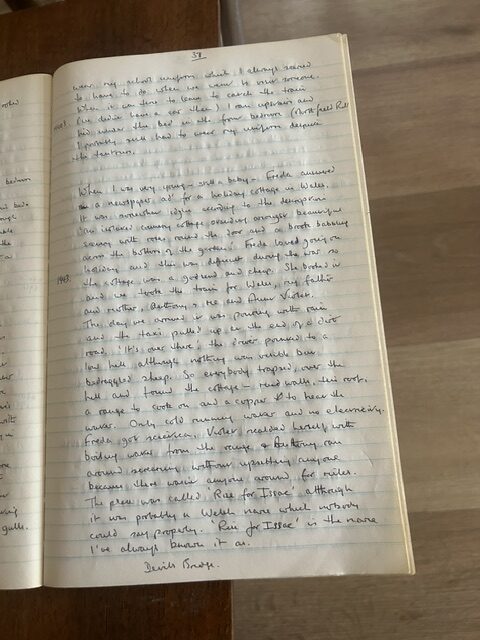
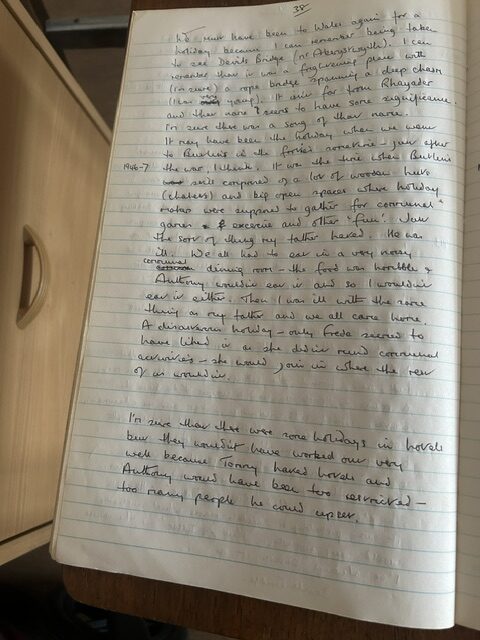
There was also a disastrous Welsh holiday at a remote cottage advertised as standing among beautiful scenery with rocks by the door and a brook at the bottom of the garden. The reality was bleak: stone walls, a thin roof, a range for cooking, a copper for heating water, cold running water and no electricity. The place was remembered as “Rise for Issac”, probably a misremembered Welsh name.
The family also visited Devil’s Bridge near Aberystwyth, remembered as frightening, with a rope bridge over a deep chasm. Butlin’s in the post-war years was also remembered unfavourably: wooden huts, communal dining, organised activities, horrible food, illness, and general misery for everyone except Freda, who enjoyed communal activity.
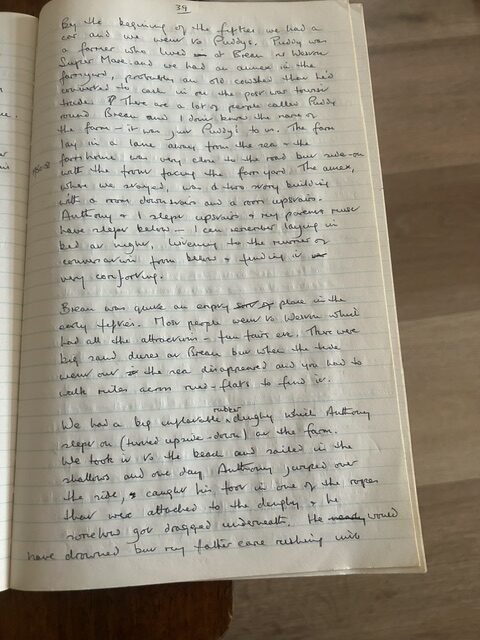
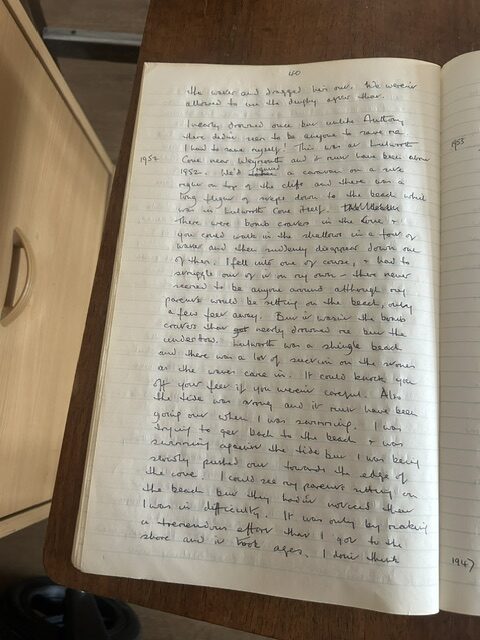
By the early 1950s the family holidayed at Bream, staying in an annex at a farm associated with a farmer called Puddy. Bream was remembered as empty, with sand dunes and mudflats. The family used an inflatable rubber dinghy, and Anthony nearly drowned when his foot caught in one of the ropes and he was dragged underneath. His father rushed in and saved him.
The narrator also nearly drowned at Lulworth Cove, probably around 1952, falling into a hidden underwater crater and later being pulled by the undertow towards the edge of the cove. No one on the beach noticed. The narrator saved themself by a prolonged struggle back to shore.
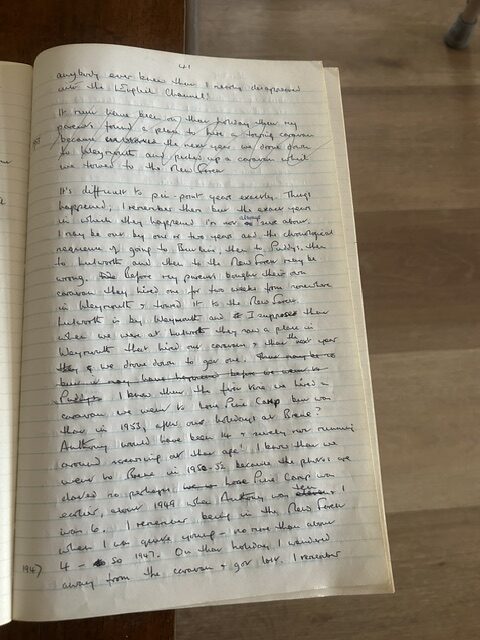
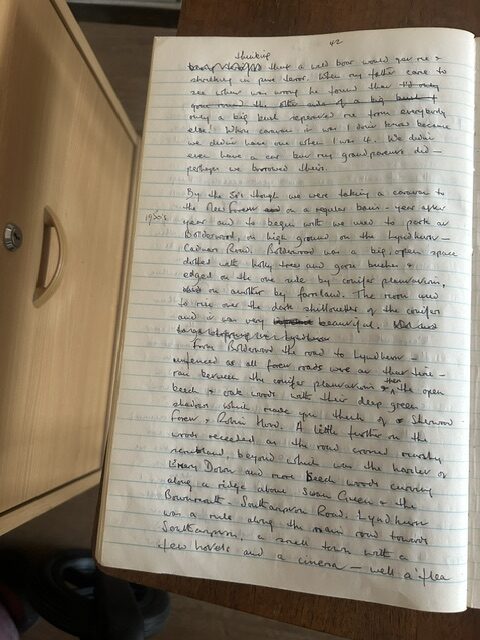
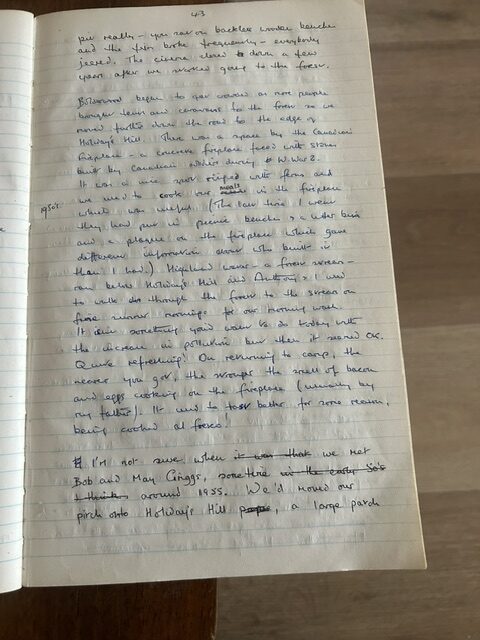
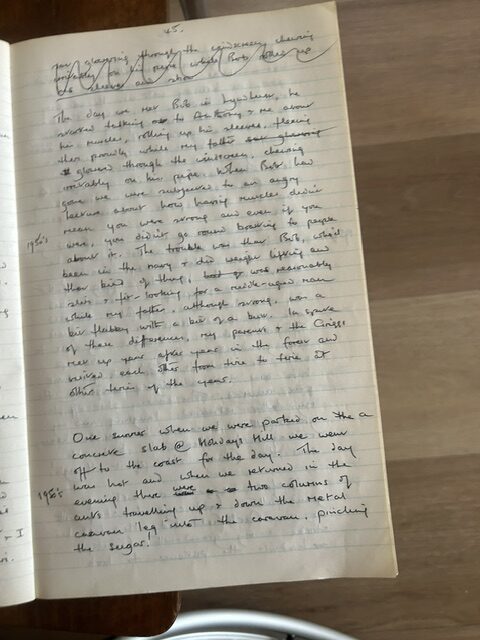
The New Forest became the family’s recurring holiday place. They camped at Bolderwood and later near Holmsley Hill, using a caravan. The memoir vividly describes Highland Water, conifer plantations, open heath, bacon and eggs cooked over the Canadian fireplace, and the development of friendships with Bob and May Griggs.
Fred Simpkin in Later Life
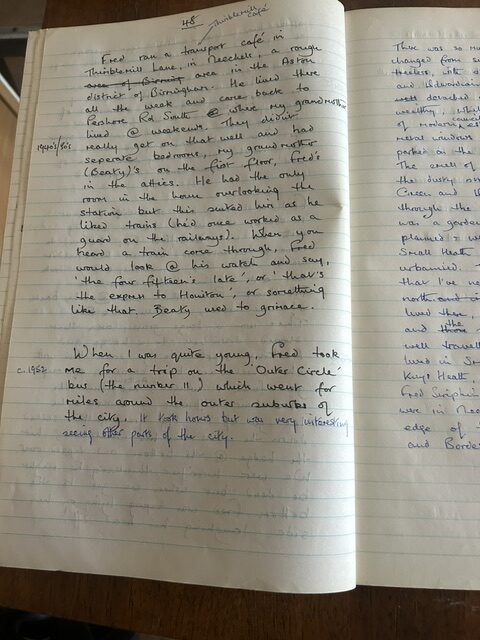
Fred Simpkin later ran a transport café in Thimblemill Lane, Nechells. He lived there during the week and returned at weekends to Pershore Road South, where Beatty lived. They had separate bedrooms. Beatty’s room was on the first floor and Fred’s in the attic.
Fred’s attic room overlooked the station, which suited him because of his railway interests. When he heard a train pass, he would look at his watch and identify it, saying things such as “the four fifteen’s late” or “that’s the express to Howton.” Beatty would grimace.
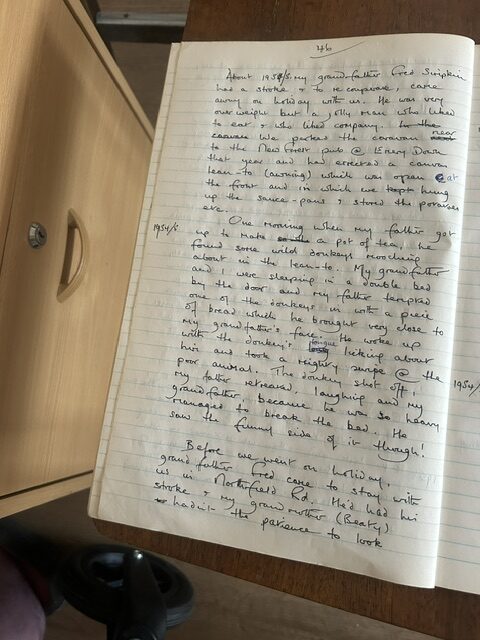
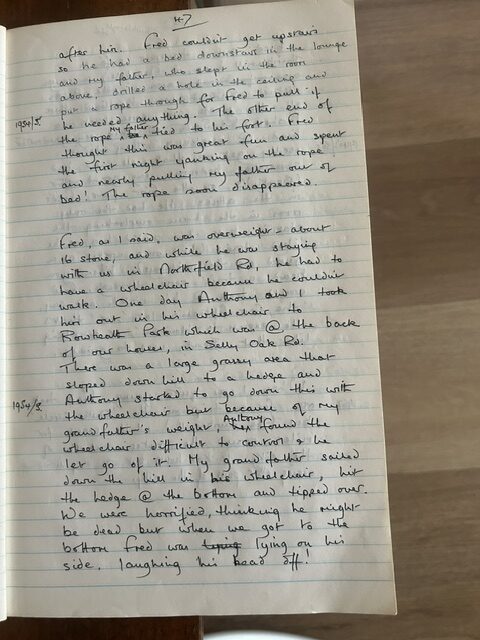
Around 1954–55 Fred had a stroke. He came to stay at Northfield Road and later joined the family on holiday in the New Forest. Because he could not get upstairs, he had a bed downstairs. The family rigged a rope through the ceiling so that he could pull it if he needed help. The other end was tied to the narrator’s father’s foot. Fred thought this very funny and pulled it repeatedly during the night, almost pulling him out of bed.
On holiday, a donkey incident became family comedy. The father tempted a wild donkey into the lean-to with bread and brought it close to Fred’s face while he slept. Fred woke to the donkey’s tongue licking him, swiped at the animal, and in the commotion broke the bed. He laughed at the incident.
Another episode involved Fred being taken in his wheelchair to Rowheath Park by Anthony and the narrator. On a grassy slope, Anthony lost control. Fred rolled downhill, hit a hedge and tipped over. The children feared he had been killed, but found him lying on his side laughing.
The Steel and Rose Note
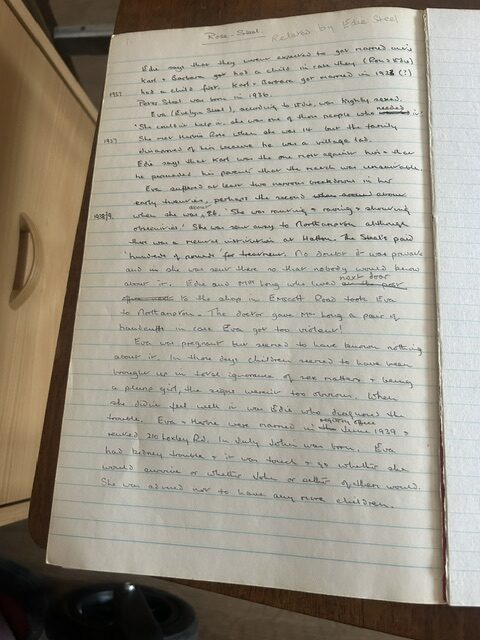
A separate note headed Rose Steel, related by Eddie Steel, records a further family-connected story. It concerns Eva / Evelyn Steel, Archie Rose, Karl, Barbara, Peter Steel, and related family tensions.
Eva was described as highly sexed, with the note quoting Eddie as saying that “she couldn’t help it”. She met Archie Rose when she was fourteen, but the family disapproved because he was over eighteen. The notes say Eva suffered nervous breakdowns in her early twenties and was sent to Northampton for treatment, despite there being a mental institution at Halesowen. The family paid privately, probably to preserve secrecy.
Eva was pregnant but apparently did not understand what was happening, reflecting the ignorance in which some girls were raised regarding sex and pregnancy. Eva and Archie married in June 1939 and moved to 210 Bordesley Road. John was born in July. Eva had kidney trouble and was advised not to have more children.
The Cubitt Car Reference
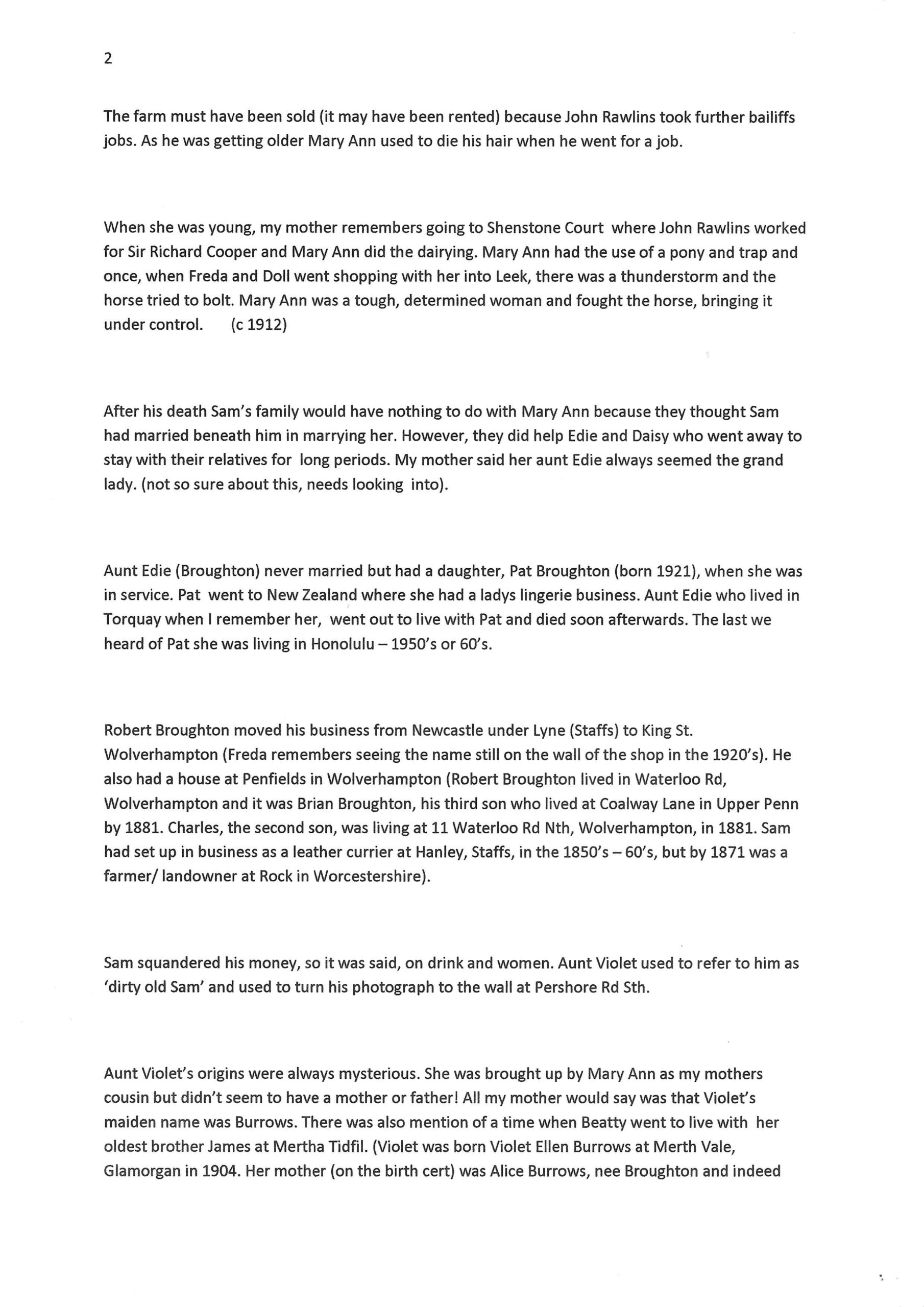
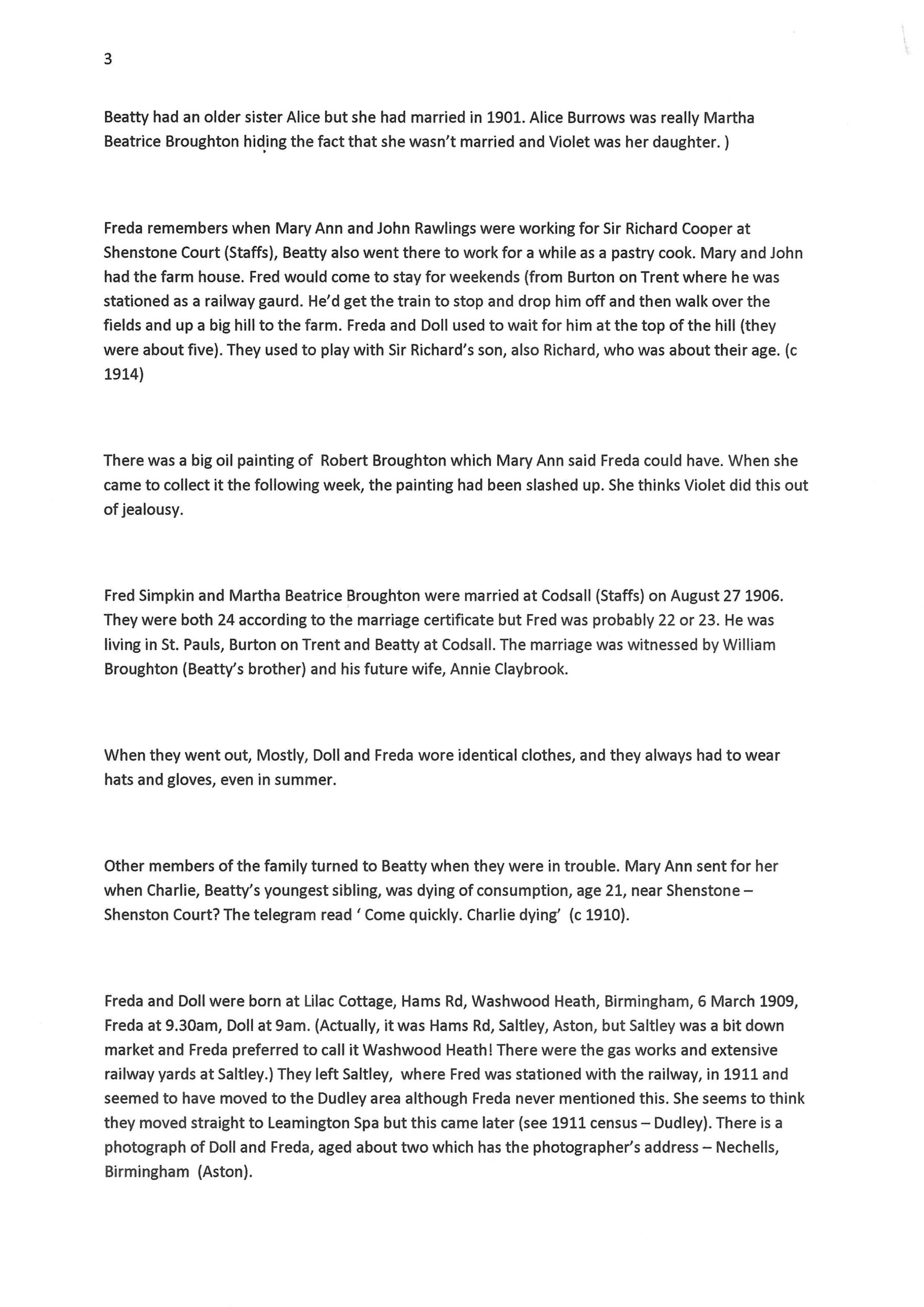
The archive includes printed material concerning a 1922 five-seater Cubitt car made in Aylesbury. This is relevant because the family memoir refers to a Cubitt car used by the family. The printed extract explains that Cubitt cars were made on the Bicester Road, Aylesbury, between 1919 and 1925, and that only a small number survived. Their high ground clearance made them suitable for rough roads, including export to Australia.
A Final 1988 Memory
The archive includes a later note dated 1988. On returning from Arrow Bank, the writer asked Becky what she had been doing. Becky said she had been playing football with Gary. Asked whether Gary had won, Becky replied that she had won five goals to one. When asked how she had managed it, she said, “I cheated.” Knowing Gary’s temper, the writer asked whether he had been mad. Becky replied that Gary said she was good at fouling.
Historical Importance of the Archive
This collection is important because it preserves several overlapping types of history:
- Criminal history: the 1852 prosecution of Samuel Broughton for horse fraud involving glandered animals;
- Women’s history: domestic service, illegitimacy, concealment, respectability and survival;
- Working-class and lower-middle-class Birmingham life: shops, schools, railways, buses, suburbs, pig bins, rag-and-bone carts and small businesses;
- Migration: Ireland to Liverpool, Birmingham movement, New Zealand, Honolulu and Australia-linked material;
- Post-war childhood: holidays, illness, danger, caravan culture and changing family leisure;
- Memory and evidence: the tension between what was remembered, what was concealed and what later records revealed.
Principal People Named in the Collection
- Samuel “Sam” Broughton — leather currier, farmer, provision merchant, convicted in 1852 for conspiracy to defraud in relation to glandered horses.
- Mary Ann Broughton / Rawlins — wife of Sam Broughton, later wife of John Rawlins; strong matriarchal figure.
- John Rawlins — bailiff, later husband of Mary Ann.
- Martha Beatrice “Beatty” Broughton / Simpkin — daughter of Sam and Mary Ann; pastry cook; mother of Violet, Freda and Doll.
- Fred Simpkin — railway guard, shopkeeper, later transport café proprietor.
- Freda Simpkin / Castello — twin daughter of Fred and Beatty; principal source of the 1986–87 recollections.
- Doll Simpkin — twin sister of Freda.
- Violet Ellen Burrows — concealed daughter of Beatty, registered under the name Alice Burrows.
- Edith “Edie” Broughton — cook, later associated with Torquay and daughter Pat.
- Daisy Broughton — trained for domestic service.
- Pat Broughton — daughter of Edie; emigrated to New Zealand, later associated with Honolulu.
- Robert Broughton — family figure associated with business in Wolverhampton and the slashed portrait.
- Edward “Teddy” Castello — Irish-born soldier, husband of Elizabeth Mulholland.
- John “Jack” Castello / Costello — boxer, publican, soldier, died in Baghdad in 1918.
- Mary Jane McCauley — wife of Jack Castello / Costello.
- Anthony — major figure in the later childhood memoir.
- Eva / Evelyn Steel — subject of the Rose Steel note.
- Archie Rose — husband of Eva.
- Becky and Gary — named in the 1988 anecdote.
Conclusion
The Simpkin–Broughton–Castello Family Papers form a rare and unusually rich family archive. They move from the criminal courts of Staffordshire in 1852 to the shops, railway yards, schools, churches and suburbs of twentieth-century Birmingham, and from hidden illegitimacy to post-war caravan holidays in the New Forest.
The collection’s power lies in its mixture of voices: official record, family correction, typed genealogy, handwritten memory and anecdote. It preserves not only names and dates, but the emotional texture of family life — shame, humour, concealment, pride, danger, work, survival and affection.
Acquired in April 2026, this archive now forms part of Ian Waugh’s continuing work to preserve and interpret British family, social and local history through original documents, photographs and privately held records.